FOOD AS MEDICINE & JOY: part 1 of 3
Part 1
A Winter Reflection: Beyond the Supplement
Part 2
Spring Fatigue, Allergies and Low Immunity
Part 3
One Food. Every Season. Every Age.
A Winter Reflection: Beyond the Supplements
By Dr. Leena Sripada, ND, AAWC
On mung beans, real nourishment, and the ancient wisdom that speaks to everyone — across every season and every age.
Winter is a beautiful season….if we are balanced enough to enjoy it.
It’s festive, grounding and rich with family time and shared meals. In many ways, winter is the season that most naturally invites us back to the table.
And yet every January, after the holidays, I notice the same thing — in my practice and on pharmacy shelves. Immune supplements, energy capsules, vitamin stacks. We reach for them with good intentions. I take supplements myself and they are part of my treatment plans. Part of why we need them is real — our soil is depleted, our food's nutrient profile is lower than it was for previous generations, and our lives are fast. They have their place.
But I want to offer a gentle reminder.
In the midst of optimising our nutrient intake, are we losing sight of something more fundamental — the profound, irreplaceable nourishment of real food? It might sound obvious…but let’s read on.
Rasa: The Juice of Life
In Ayurveda, there is a concept I return to again and again — in my practice and in my own life. It is called Rasa.
Rasa is a beautifully layered word. It means:
taste and flavour
the essence of sensory enjoyment
experience
the very juice of life itself
Rasa dhatu is the first tissue formed after digestion. It governs hydration, lymphatic flow, emotional nourishment, and the foundation of our vitality.
When we eat real food with presence and enjoyment — when flavours open on the tongue and warmth spreads through the chest — we build healthy Rasa dhatu.
When we eat without presence… rushing, distracted, stressed… Rasa becomes thin. This shows up as fatigue, anxiety, dryness, and that particular emotional hunger — a lack of satisfaction after meals that no supplement can touch. The body receives information, but not nourishment. There is a real difference between the two. And we feel it.
A capsule can deliver nutrients. It cannot spark delight, create warmth, evoke memory, or satisfy the deep human need for real nourishment.
The Power of Warm Broths in Winter
Winter makes a specific and often underestimated metabolic demand. Our bodies work continuously to maintain core temperature — drawing on iron stores, protein reserves, and digestive fire — Agni — to convert food into usable energy and warmth.
This is not depletion. It is the body doing exactly what it is designed to do. But it does mean that winter rewards deep, warming nourishment above all else.
If you look across cultures that lived in cold climates — almost every one of them developed a tradition of warm broths, slow-cooked legumes, and spiced soups in winter. Not by coincidence. By centuries of accumulated wisdom about what a body needs when the temperature drops.
"Food prepared with love and care, eaten in a calm and happy environment, nourishes us not just in the body — but in the nervous system and whole being."

The Power of Mung Bean Soup in Ayurveda
Among all the foods Ayurveda recommends for winter, mung beans hold a uniquely revered place. They are considered the most sattvic of legumes — bringing clarity and peace of mind alongside physical strength. Unlike heavier beans that can cause gas and sluggishness, mung beans are light enough to digest with ease, yet dense enough in nutrition to genuinely sustain.
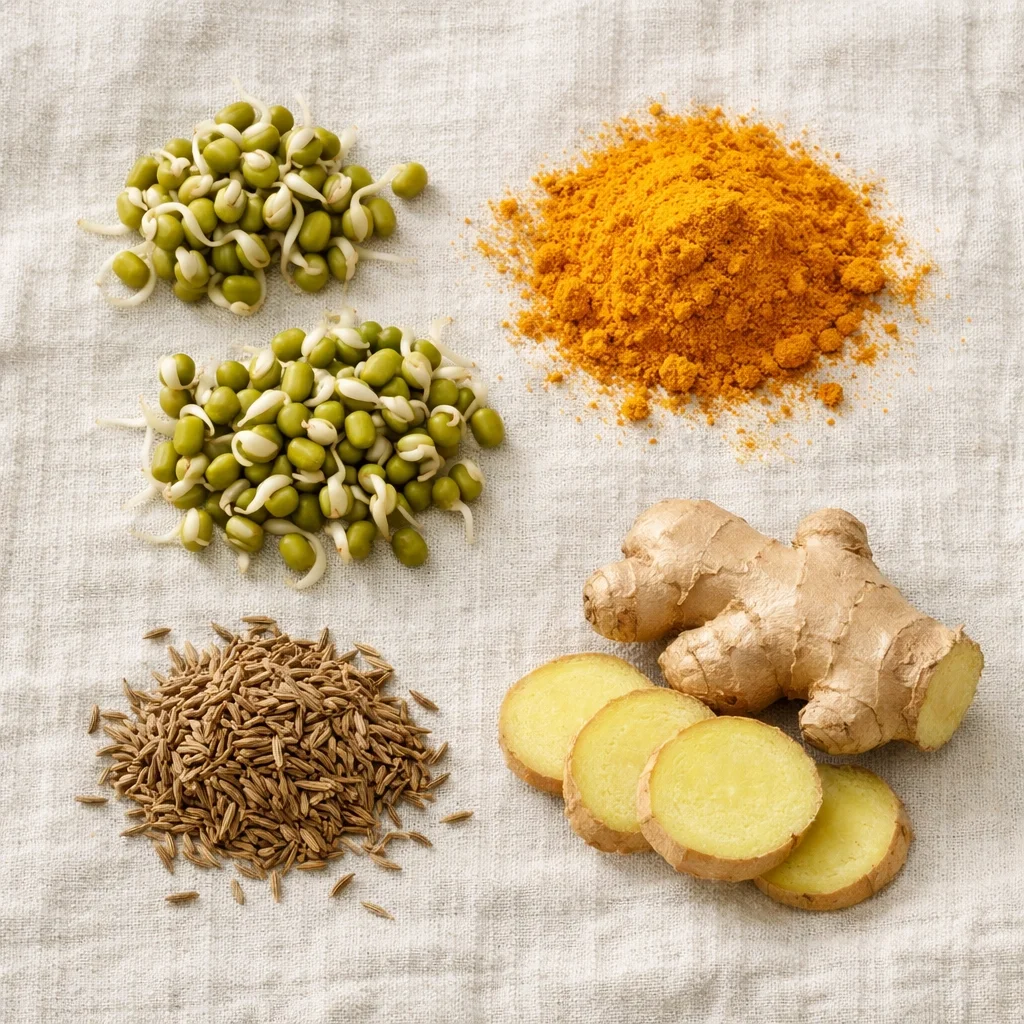
In my own home, one of the first things I make when the cold settles in is a lentil soup — a simple soup with split mung beans, veggies, simmered with turmeric, cumin, and ginger. It is warm, satisfying, and grounding in a way that is hard to describe but easy to feel. In my practice, it is often the first food I recommend to patients who are depleted, stressed, or simply in need of something real.
A warm mung broth delivers on every level:
Plant protein: highly digestible, building immunity and strength without burdening digestion.
Iron: carrying oxygen to every cell, directly supporting warmth and sustained energy.
Prebiotic fibre: feeding beneficial gut bacteria, supporting immunity, and slow-release energy through cold, dark days.
B vitamins, magnesium and choline: supporting liver function, nerve health, and adrenal resilience.
When mung beans are sprouted before preparation — as Ayurveda has always recommended — this nourishment deepens further. Sprouting breaks down antinutrients, making protein, iron, and B vitamins substantially more bioavailable. More absorbed. More delivered. More felt.
This is not just a nutritious meal. It is Rasa dhatu being built in real time — hydration, vitality, and emotional ease replenishing with every warm sip.
I recently discovered Moong Pani, which makes mung bean broths and meals, right here in Toronto. For those who don't have time to sprout and slow-cook traditionally — and most of us don't — Moong Pani bridges that gap. Sprouted mung beans, spiced with intention, ready in minutes. Not a supplement. Food.
The Energetics of Eating
In Ayurveda, how we eat matters as much as what we eat. There is a whole science of lifestyle — of daily rhythm, of eating at the right times for our constitution — that shapes how deeply food nourishes us.
When we rush and eat without presence, even the most nutritious food does not fully nourish us. But healthy, fresh food prepared with love and care, eaten in a calm and happy environment, nourishes us not just in the body — but in the nervous system and whole being.
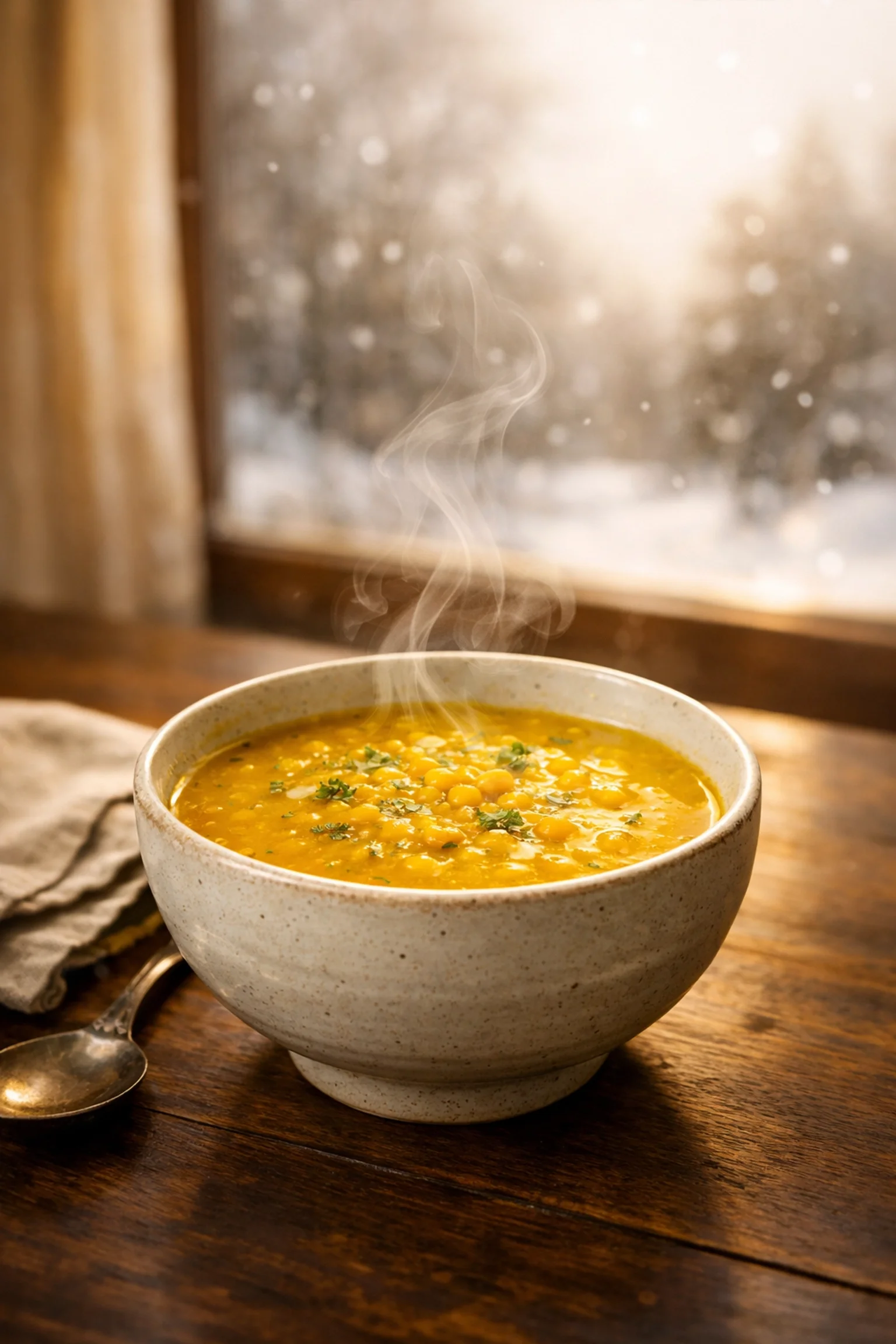
The ritual of sitting with a warm cup of mung broth — holding it, breathing in the steam, tasting the spices — is as nourishing as the broth itself.
A Final Thought
In a season as rich and connective as winter, this is the invitation: return to the table. Let food be your first medicine.
May we feel nourished, hydrated, and supported.
May our Rasa be full and flowing.
Next — Part 2: Spring Fatigue, Allergies and Low Immunity — Why That Happens and How to Change That
→ Discover Moong Pani — sprouted mung bean broth for real nourishment
Dr. Leena Sripada, ND, AAWC is a Naturopathic Doctor and Ayurvedic practitioner writing at the intersection of ancient wisdom and modern health.
***
To work with Dr Leena, you can visit: www.doctorleena.ca
To learn more about Moong Pani, visit: https://moongpani.com